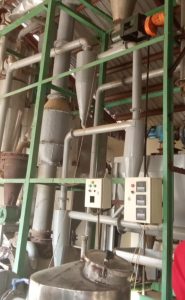
A visit to the pilot plants of the Raw Materials Research and Development Council (RMRDC) in Abuja has offered delegates and journalists a remarkable insight into Nigeria’s growing capacity to transform its abundant raw materials into finished and industrial products using locally fabricated machinery.
The visit, led by the Director-General of RMRDC, Professor Nnanyelugo Ike-Muonso, exposed participants to the impressive range of technologies and production facilities developed to promote local manufacturing, value addition, technology transfer and industrial growth.
According to the Director-General, nearly all the machinery used in the Council’s 46 pilot plants was fabricated in Nigeria, demonstrating the country’s capacity to develop indigenous engineering solutions and reduce dependence on imported industrial equipment.
The facilities, many of which were demonstrated to be functional during the visit, are designed to process raw materials into products for pharmaceutical, construction, chemical and other industrial applications.
For the delegates and journalists who toured the facilities, the experience provided a practical demonstration of what Nigeria can achieve when research, local engineering expertise and the development of indigenous raw materials are brought together.
From Raw Materials to Finished Products
The pilot plants cover a wide range of production activities, reflecting the Council’s commitment to promoting the industrial utilisation of materials available within Nigeria.
Among the facilities showcased were pilot plants for hydrated lime production, plaster of Paris, engineering fabrication, kaolinite processing, caustic soda and precipitated products, calcium carbonate production, and pharmaceutical-grade talc associated with GTIL Integrated Biologics Limited.
Other facilities focus on specialised mineral processing and the development of industrial equipment to support the conversion of locally available resources into useful products.
The diversity of these facilities highlights the potential for Nigeria to move beyond exporting raw materials and develop domestic industries capable of processing them into higher-value products.
By strengthening local processing capacity, the country could expand manufacturing opportunities, create jobs, support small and medium-scale enterprises and encourage the emergence of new businesses across different sectors of the economy.
Nigerian-Made Machines Take Centre Stage
One of the major highlights of the visit was the level of local fabrication evident across the facilities.
The Director-General explained that nearly 75 per cent of the machines were fabricated locally, underscoring the potential of Nigerian engineers and technicians to design and build equipment for industrial production.
The achievement points to opportunities for strengthening indigenous engineering, encouraging technology development and building local expertise in machinery fabrication.
It also demonstrates how research institutions can contribute to industrial development by moving beyond theoretical research to practical solutions that can be tested, demonstrated and adapted for commercial production.
For a country seeking to diversify its economy and reduce dependence on imported goods, the development of locally fabricated industrial machinery represents an important step towards building a stronger manufacturing base.
The pilot plants also provide a platform for researchers, entrepreneurs, investors and manufacturers to explore the commercial potential of indigenous raw materials and identify opportunities for collaboration.
RMRDC DG Seeks Global Support
Impressed by the opportunities presented by the facilities, the Director-General called on well-meaning Nigerians, investors, industrialists and the international community to support the Council’s initiatives.
He emphasised the need for greater investment in research, technology development and the commercial application of locally available raw materials.
The Council’s appeal is directed at individuals and organisations willing to partner with Nigeria in expanding production, developing indigenous technologies and creating sustainable industrial enterprises.
Support for the initiative could help bridge the gap between research and large-scale commercial manufacturing, enabling promising technologies developed at the pilot-plant level to reach wider markets.
Increased investment could also provide opportunities to improve production capacity, strengthen technical expertise and develop new products for domestic consumption and export.
The Director-General’s call therefore places emphasis on collaboration among government institutions, the private sector, universities, research organisations and international partners to unlock the country’s industrial potential.
An Opportunity for Job Creation and Economic Growth
Beyond the machinery and production facilities, the pilot plants offer opportunities to address unemployment through practical training, entrepreneurship and industrial development.
The facilities could support the training of young Nigerians in engineering, manufacturing, mineral processing and other technical fields, while providing a foundation for entrepreneurs interested in establishing businesses around locally processed raw materials.
The commercialisation of technologies developed at the pilot plants could also stimulate demand for skilled workers, technicians, engineers and other professionals.
Furthermore, the development of industries around Nigeria’s raw materials could create opportunities for communities where these resources are available, allowing more economic value to remain within the country.
Such an approach would support the broader objective of building an economy in which natural resources serve as the foundation for manufacturing, innovation and sustainable employment.
Nigeria’s Industrial Future
The visit to the RMRDC pilot plants provided delegates and journalists with a practical view of Nigeria’s potential to develop homegrown solutions to industrial challenges.
The facilities demonstrated how locally fabricated machinery and research-driven production processes can contribute to the transformation of raw materials into products with commercial and industrial value.
However, translating this potential into large-scale economic benefits will require sustained investment, effective partnerships, market access and the expansion of successful pilot technologies into commercially viable production.
For the RMRDC, the challenge and opportunity lie in attracting the support required to strengthen these facilities and extend their impact beyond research and demonstration.
The Council’s message is clear: Nigeria possesses raw materials, technical knowledge and locally developed technologies that can contribute to industrial growth. With the right investment and partnerships, these resources can be harnessed to create jobs, support local manufacturing and open new opportunities for economic development.
The visit was therefore more than a tour of industrial facilities. It was a demonstration of the possibilities that exist when Nigerian ingenuity is applied to the development of Nigerian resources—and a call for investors and development partners to help turn those possibilities into lasting industrial achievements.