By Chioma James
The Federal Road Safety Corps (FRSC) and the National Identity Management Commission (NIMC) have intensified collaboration on data integration as part of efforts to strengthen national security, improve identity management, and enhance road safety across Nigeria.
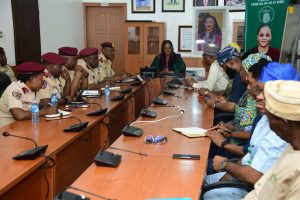
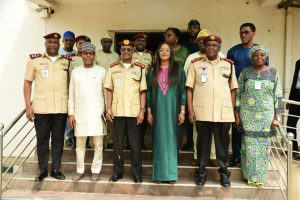
Corps Marshal Shehu Mohammed disclosed this following a high-level strategic meeting with NIMC Director-General, Engr. Abisoye Coker-Odusote, in Abuja.
He stressed that harmonising government databases is critical to building a secure, technology-driven nation where individuals can be accurately identified, tracked, and held accountable when necessary. According to him, credible identity systems are fundamental to effective law enforcement, national planning, and the reduction of road traffic crashes.
Mohammed commended NIMC for expanding Nigeria’s identity database and strengthening the National Identification Number (NIN) ecosystem, describing the initiative as a cornerstone of modern governance.
The FRSC boss also reaffirmed the Corps’ plan to enforce the use of NIN as a mandatory requirement for vehicle registration and the issuance of the National Driver’s Licence. He said the measure would sanitise the motoring environment, curb fraud, and improve traceability of drivers and vehicle owners nationwide.
He further requested FRSC’s inclusion in NIMC’s Annual Identity Forum, noting that the Corps serves as a frontline identity manager through its licensing and vehicle registration functions. Closer institutional cooperation, he added, would accelerate innovation, improve data accuracy, and boost operational efficiency across agencies.
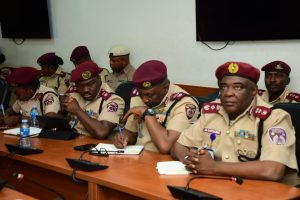
In her response, NIMC Director-General Engr. Coker-Odusote pledged the Commission’s commitment to sustained partnership with FRSC, particularly in data integration initiatives that support road safety and national security objectives.
She also commended the ongoing reforms and modernisation within the Corps, expressing confidence that stronger synergy between both agencies would deliver significant benefits to Nigerians.
The engagement represents another step in the Federal Government’s broader push to establish a unified digital identity architecture — a system expected to enhance governance, promote accountability, and better safeguard lives on the nation’s roads.