By Stella Okoh-Esene
Women journalists across Nigeria have renewed calls for the urgent passage of the Special Seat Bill aimed at increasing female representation in governance, describing it as a critical step toward inclusive and equitable political participation.
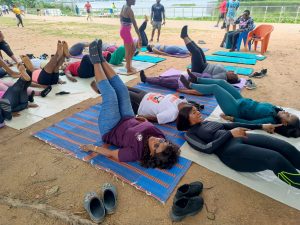
The call was made during the *Fit for Inclusion* programme held in Abuja a collaborative initiative organized by the Women in Media Development Initiative (WIMDI) in partnership with the Nigeria Association of Women Journalists (NAWOJ), FCT Chapter and Gender Strategy Advancement International (GSAI). The event combined advocacy and wellness sessions to empower women in the media space and amplify their influence on gender-sensitive political reforms.
Participants and speakers at the event emphasized that the Special Seat Bill, co-sponsored by Deputy Speaker Benjamin Kalu and 12 other legislators, proposes constitutional amendments to reserve specific seats for women in the Senate, House of Representatives, and State Houses of Assembly.
“Women are politically marginalized. A woman understands the challenges women face. This bill is not just a political tool—it is a corrective mechanism for structural imbalance,” a speaker noted.
The stakeholders stressed the importance of grassroots advocacy and community sensitization to build public support and pressure lawmakers into acting.
“We must stop seeing it as ‘women’s seats’ and instead as a democratic necessity to ensure fair representation. This campaign must now begin from the grassroots—bottom-up, not top-down,” they emphasized.
In her remarks, Comrade Bassey Ita Ikpang, Chairperson of NAWOJ FCT, urged media practitioners to promote “responsible and issue-based journalism” emphasizing the role of the media in challenging stereotypes and amplifying women’s achievements rather than their gender.
“Let’s stop viewing women leaders through the lens of gender alone. Let’s highlight what they bring to the table. Women journalists must do more to educate the electorate, particularly at the grassroots, on why the Special Seat Bill matters.”
She added that persistent narratives about women not supporting each other must be challenged, calling on women to “feel, think, and speak” solidarity.
Adaora Sydney Jack, Executive Director of GSAI and a former political candidate, shared personal insights on the challenges of participating in politics.
“Until I ran for office, I never understood the real barriers. Now, I say this with conviction: you can’t fix the system from the outside. We need more women in the room—even if the room is broken.”
She decried the current low female representation in the National Assembly, with only 3 women in the Senate and 15 out of 360 in the House of Representatives.
“What influence can they really have? Without numbers, there’s no negotiation power. We must see this bill not just as an opportunity for elite women but as a gateway for all women—especially those living with disabilities, the youth, and marginalized voices.”
Lara Owoeye-Wise, a veteran journalist, advocated for a collective digital campaign to spread awareness.
“Let every NAWOJ member use their social media handles, airwaves, and networks. If the Bill passes, it will be because our voices were united—for our daughters, for our future.”
Osasu Oguche, founder of TOS Group, added that politics is fundamentally about decision-making, and women must no longer be left out.
“Even if you’re not contesting, you must add your voice. We must create a space for those with the capacity to lead to access power. We owe it to Nigeria.”
The Fit for Inclusion programme concluded with a strong consensus: media advocacy, grassroots education, and strategic engagement with policymakers are key to ensuring that the Special Seat Bill becomes law and that women’s voices are fully represented in Nigeria’s democratic process.