By Chioma Vivian James
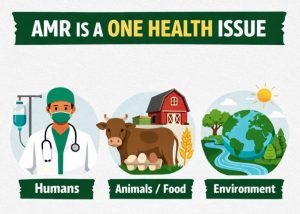
Nigeria is set to take center stage in the global fight against antimicrobial resistance (AMR) as it hosts the 5th High-Level Global Ministerial Meeting on AMR in Abuja from June 28 to 30, 2026- marking the first time the pivotal summit will be held on African soil. With the theme “One Health – Advancing Global AMR Commitments Through Local Action,” the gathering is expected to redefine how the world confronts one of the most urgent and complex public health threats of the 21st century.
At a time when the misuse and overuse of antimicrobials are accelerating drug resistance, experts warn that humanity is inching toward a dangerous tipping point where common infections, once easily treated, could again become deadly.
The Abuja summit comes as a decisive intervention, bringing together delegates from over 100 countries, including heads of state, ministers, and leading global health authorities, in a rare show of unified concern over a crisis that spans human health, agriculture, food systems, and the environment.
Speaking at a global media briefing organized by the Global AMR Media Alliance (GAMA), Nigeria’s Ministerial Global Envoy on AMR, Dr. Ayoade Alakija, described the meeting as more than a diplomatic engagement it is a turning point.
She stressed that the summit will champion a “One Health” approach, integrating efforts across health, agriculture, environment, and finance sectors to deliver coordinated and sustainable solutions.
“AMR is not just about preserving medicines for humans,” she said. “It is about protecting our animals, securing our food systems, and safeguarding our environment.
Fragmented responses have slowed progress this summit is about changing that narrative.”
Central to the discussions will be the issue of financing, widely regarded as the Achilles’ heel of global AMR response especially in low- and middle-income countries.
Dr. Alakija underscored the economic urgency, noting that every dollar invested in combating AMR could yield up to elevenfold returns, making it not only a health priority but a smart economic strategy.
The Abuja meeting is also expected to build on the momentum of the 2024 United Nations General Assembly High-Level Meeting on AMR, shifting the global focus from policy declarations to measurable, country-level implementation. It will consolidate lessons from previous ministerial engagements and push for continuity frameworks that ensure sustained and accountable action.
Dr. Jean Pierre Nyemazi, Director of the Quadripartite Joint Secretariat on AMR, described the summit as a critical inflection point. “AMR is silently eroding health systems and economies, particularly in developing nations. Abuja must deliver results that translate global commitments into real, tangible impact,” he said.
The summit enjoys the backing of leading global institutions, including the World Health Organization, Food and Agriculture Organization, United Nations Environment Programme, and World Organisation for Animal Health a powerful coalition underscoring the urgency for a unified, multisectoral response.
Current estimates indicate that AMR is already responsible for millions of deaths globally, with the heaviest burden borne by underserved populations in developing countries. Weak health systems, poor sanitation, and limited access to diagnostics and essential medicines continue to deepen vulnerability and widen inequality.
Chairperson of GAMA, Shobha Shukla, highlighted the human cost of inaction. “AMR does not affect everyone equally. In places where health systems are fragile, the risks are far greater. Tackling AMR must go hand in hand with advancing equity and strengthening healthcare access,” she said.
Stakeholders also pointed to an ambitious global target reducing AMR-related deaths by 10 percent by 2030, against the estimated 4.9 million deaths recorded in 2019.
Encouragingly, experts emphasize that simple, cost-effective interventions such as improved hygiene, infection prevention, responsible antimicrobial use, and enhanced diagnostics can significantly slow the spread of resistance if widely implemented.
In a move to amplify awareness and accountability, GAMA announced the 2026 Global AMR Media Awards, aimed at recognizing impactful journalism and elevating public discourse on the crisis, with special focus on coverage of the Abuja summit.
With President Bola Ahmed Tinubu expected to declare the meeting open, expectations are high that Nigeria’s leadership will not only amplify Africa’s voice in global health governance but also catalyze bold, actionable commitments toward preserving the effectiveness of lifesaving medicines.
For global health advocates, the stakes could not be higher.
The Abuja summit is not just another conference it is a defining moment. A moment to act decisively, or risk a future where the simplest infections once again become a death sentence.