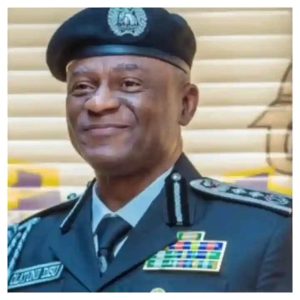
By Uloma Peace Okorie
When history is written about the evolution of policing in Nigeria, leadership will undoubtedly occupy a prominent place. Security institutions are strengthened not merely by uniforms, weapons or technology, but by the vision, courage and humanity of those entrusted with command. Since assuming office as Inspector-General of Police, IGP Olatunji Rilwan Disu has projected a leadership style that combines operational firmness with compassion, earning him admiration from many within and outside the Nigeria Police Force.
At a time when Nigeria continues to battle terrorism, banditry, kidnapping, violent crimes and other forms of insecurity, the expectations placed on the nation’s police chief are enormous. Yet, rather than allowing these challenges to overwhelm the institution, Disu has approached the assignment with renewed energy, strategic thinking and a determination to restore public confidence in policing.
Perhaps one of the greatest qualities that distinguish IGP Disu is what many describe as his “milk of human kindness.” Behind the firmness expected of the nation’s chief law enforcement officer lies a leader who appreciates that officers perform best when they are motivated, protected and treated with dignity. His emphasis on personnel welfare, career progression, improved insurance benefits, timely promotions and prompt payment of entitlements demonstrates an understanding that a police force can only be as effective as the morale of its officers.
Beyond welfare, the Inspector-General has consistently emphasized professionalism, discipline and accountability. His message is clear: the Nigeria Police Force must be respected not because of the powers it possesses but because of the integrity with which those powers are exercised. That philosophy has continued to shape public expectations of a modern police institution that is both firm against criminals and respectful of the rights of law-abiding citizens.
Equally noteworthy is his preference for dialogue and peace-building in addressing security concerns. During interactions with stakeholders in different parts of the country, including Enugu and Osun States, IGP Disu stressed that peace remains the surest foundation for development and that there is no genuine alternative to peaceful coexistence. His appeal for dialogue among communities, traditional rulers, youth groups and other critical stakeholders reflects an understanding that sustainable security is built not only through arrests and prosecutions but also through trust, cooperation and conflict prevention.
This peace-oriented approach does not imply weakness. Rather, it recognizes that intelligence gathering becomes more effective when communities see the police as partners instead of adversaries. Criminals thrive where citizens are afraid to volunteer information. A police leadership that builds confidence among the people strengthens the nation’s first line of defence against crime.
Another important conversation that deserves renewed attention under the current leadership is the issue of state police. Although opinions remain divided, the growing complexity of Nigeria’s security landscape suggests that policing should become more community-based and intelligence-driven. Properly established state police, with constitutional safeguards against abuse, could complement the Nigeria Police Force by handling local security responsibilities while the federal police concentrate on terrorism, interstate crimes, cybercrime, organized criminal networks and other national security threats.
Such a complementary arrangement would not diminish the authority of the Nigeria Police Force. Instead, it would reduce the enormous burden currently placed on the institution and allow the Inspector-General to focus more effectively on national policing priorities, operational coordination and strategic crime prevention. If carefully implemented, state police could become a force multiplier rather than a rival institution.
Leadership is often judged not only by results but also by the hope it inspires. Since assuming office, IGP Disu has sought to instill confidence among officers while reassuring Nigerians that the fight against insecurity remains the foremost priority of the Nigeria Police Force. His background in intelligence-led policing and operational command has shaped a pragmatic approach that values professionalism, community partnership and measurable performance.
Nigeria’s security challenges will not disappear overnight. They require sustained investment, institutional reforms, public cooperation and political will. Yet every meaningful reform begins with purposeful leadership. In IGP Olatunji Disu, many Nigerians see a police chief determined to build a Force that is more responsive, compassionate, accountable and effective.
The task ahead remains demanding, but with continued commitment to professionalism, personnel welfare, peaceful engagement and operational excellence, the current leadership of the Nigeria Police Force has an opportunity to leave a legacy that future generations of police officers and indeed Nigerians will remember with pride.