By Chioma Vivian James
The Federal Road Safety Corps (FRSC) has commenced an international training workshop aimed at equipping law enforcement officers across Nigeria with practical skills to manage occupational stress, strengthen emotional resilience and improve their overall effectiveness.
The workshop, titled “International Training Workshop on Stress Management and Emotional Well-being for Law Enforcement Officers in Nigeria,” opened on Monday, August 10, 2026, at the ICT Hall of the FRSC National Headquarters in Abuja.
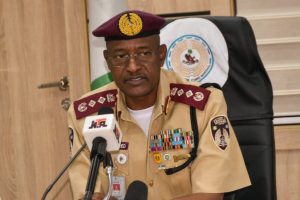
Declaring the workshop open, the Corps Marshal of the FRSC, Shehu Muhammed, mni, FCA, FCIT, CPFA, said the increasing demands placed on law enforcement personnel had made mental and emotional well-being an important part of operational readiness.
Muhammed noted that officers are routinely exposed to traumatic incidents, road traffic crashes, emergencies, disasters, security challenges and other critical situations, which could take a significant psychological and emotional toll.
He stressed that while law enforcement agencies traditionally focus on technical and operational competence, sustainable effectiveness also requires personnel to be mentally and emotionally fit.
According to him, unmanaged stress can affect judgement, decision-making, interpersonal relationships, productivity and overall operational performance.
He therefore described the strengthening of psychological resilience among law enforcement officers as a strategic necessity rather than an optional consideration.
The workshop is being organised in collaboration with Rashtriya Raksha University, India, as part of efforts to align human capacity development within Nigeria’s law enforcement community with international best practices.
Muhammed said the programme would expose participants to practical approaches to stress management, emotional regulation, psychological resilience, self-management and peer support.
He added that these skills would not only benefit officers personally but could also improve professionalism, casualty handling, emergency response and service delivery to the Nigerian public.
The Corps Marshal disclosed that the workshop had been in planning for more than a year and was deliberately designed to provide frontline and tactical-level officers with practical tools for recognising emotional challenges, promoting mental health awareness and managing workplace stress.
He urged participants drawn from the Nigeria Police Force, Nigeria Immigration Service, Nigerian Correctional Service, Nigeria Customs Service, Federal Fire Service and Nigeria Security and Civil Defence Corps to actively participate in the sessions and learn from the international facilitators.
Muhammed also expressed appreciation to the Government of India, through Rashtriya Raksha University, for its support and expertise, describing the collaboration as another milestone in international cooperation aimed at strengthening institutional capacity among Nigerian law enforcement agencies.
He acknowledged the support of the Federal Ministry of Foreign Affairs and other stakeholders whose contributions facilitated the programme.
According to him, the success of the workshop should not be measured merely by the knowledge acquired during the sessions in Abuja and Enugu, but by how effectively participants apply the lessons in their respective organisations.
He called for the development of workplace cultures where mental health is recognised as an essential component of operational preparedness.
“Taking care of those who protect the society is indispensable to building safer communities and stronger institutions,” he said.
The Corps Marshal further urged participants to return to their respective organisations as ambassadors of psychological wellness and resilience, expressing optimism that the knowledge gained would contribute to improved professionalism, effectiveness and emotional well-being among law enforcement officers across Nigeria.
The opening ceremony brought together senior representatives of participating security and law enforcement agencies, international facilitators, development partners and other stakeholders.
Muhammed formally declared the international training workshop open, wishing participants fruitful deliberations and a rewarding learning experience.