By Uloma Peace Okorie
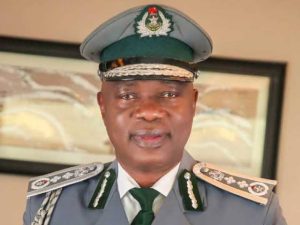
The Nigeria Customs Service (NCS), under the leadership of Comptroller-General of Customs, Bashir Adewale Adeniyi, is strengthening its commitment to community development through strategic interventions in education, healthcare, humanitarian support and social welfare.
Through its Customs Cares Corporate Social Responsibility (CSR) initiative, the Service is extending its impact beyond its traditional responsibilities of revenue collection, trade facilitation and border security to improving the lives of Nigerians in communities across the country.
The initiative, launched in March 2025, reflects the Service’s growing recognition that effective public service must be measured not only by revenue generated and contraband intercepted, but also by its positive contribution to society.
Investing in Education and the Future
One of the major achievements of Customs Cares is its intervention at Ife Girls High School in Ile-Ife, Osun State, where the Service rehabilitated the institution’s facilities following an assessment visit by the Comptroller-General on May 29, 2026.
The school, established more than six decades ago, had experienced years of infrastructural deterioration affecting classrooms, laboratories, sanitary facilities and its library.
On September 14, 2026, the Nigeria Customs Service commissioned the renovated school, providing a more conducive learning environment for students and staff.
Beyond infrastructure, the Service announced university scholarships for the school’s three best-performing students, demonstrating its commitment to supporting academic excellence and creating opportunities for young Nigerians.
Speaking during the commissioning, Adeniyi emphasised the importance of education in shaping the future of individuals, families and the nation.
The intervention underscores the Service’s belief that investing in education is an investment in Nigeria’s long-term development.
Bringing Healthcare Closer to Communities
In another significant intervention, the NCS commissioned the rehabilitated Ebubu Primary Healthcare Centre in Eleme, Rivers State, on September 15, 2026.
The project was undertaken to improve access to primary healthcare services for residents and surrounding communities.
Adeniyi explained that access to healthcare was fundamental to human dignity, productivity and community development, noting that the condition of the facility before rehabilitation had affected the delivery of quality healthcare.
He stressed that the Service’s responsibility to Nigerians extended beyond its statutory mandates to include initiatives that improve the wellbeing of communities where it operates.
The Comptroller-General also called for proper management and maintenance of the facility, emphasising that its long-term success would depend on adequate staffing, regular maintenance and continued support from relevant government institutions and community stakeholders.
A Broader Vision of Public Service
Customs Cares has also supported interventions in other areas, including school renovations, scholarships, medical outreaches, food distribution, agricultural initiatives, skills acquisition, solar-powered lighting, borehole projects and community infrastructure.
The initiative has extended to vulnerable groups, including inmates in correctional facilities. In February 2026, the Service commissioned a four-classroom block at the Kirikiri Medium Correctional Centre in Lagos to improve access to education and support the reintegration of inmates into society.
These interventions demonstrate the expanding scope of the Service’s corporate social responsibility programme and its commitment to contributing to national development.
The programme also reflects an approach to public service that recognises the importance of partnerships with state governments, traditional rulers, community leaders, healthcare institutions and other stakeholders.
Beyond Revenue Collection
For Adeniyi, the impact of the Nigeria Customs Service should not be measured exclusively by revenue figures and enforcement statistics, but also by the positive difference it makes in the lives of Nigerians.
This approach places community welfare alongside the Service’s core responsibilities, reinforcing the connection between national development, institutional responsibility and public trust.
The Customs Cares initiative is therefore emerging as an important platform through which the Service can demonstrate that border protection and revenue generation can go hand in hand with social investment.
As the programme continues to support education, healthcare and community infrastructure, its long-term impact will depend on sustained implementation, effective partnerships and proper maintenance of completed projects.
With these interventions, the Nigeria Customs Service under Adeniyi is reinforcing its commitment to a public service model that seeks not only to protect the nation’s economic interests but also to contribute meaningfully to the wellbeing and development of its people.Source: Nigeria Customs Service, Official Monthly Newsletter, September 2026, which reports on the Customs Cares initiative and its education, healthcare and community-development projects.